
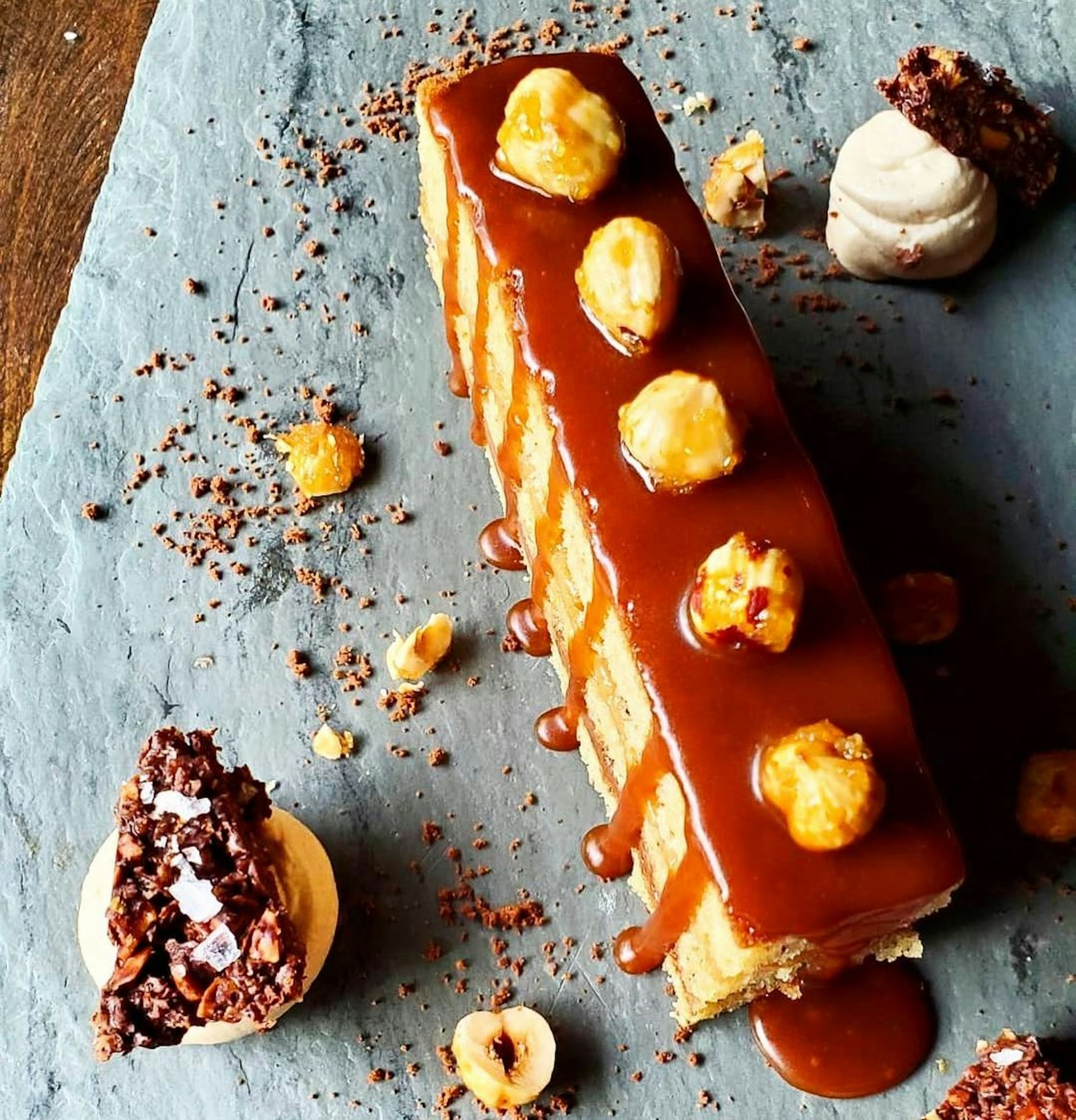
Guests forget a lot about a wedding. They rarely forget the food. That alone is reason to look closely at how a venue handles catering, because the choice between an in-house kitchen and bringing your own shapes the day long before the first plate is served. Here is the honest case for in-house.
What In-House Catering Actually Means
In-house catering means the venue cooks and serves its own food from its own kitchen, with its own culinary team. Bringing your own means the room and the food come from two separate businesses that have to be coordinated to work as one. On paper the difference sounds small. In practice it changes almost everything about the experience.
One Kitchen, One Accountable Team
At TillingHouse the culinary is led by Chef Ryan DePersio, one of New Jersey's most respected chef-restaurateurs, whose restaurants include Battello in Jersey City and Fascino in Montclair. Day to day, the kitchen is run by Executive Chef Dennis Mathews and his team. That is a single group of people responsible for your food, from the tasting to the last course, rather than a caterer arriving as a guest in an unfamiliar room. It is the heart of our in-house wedding catering in Monmouth County.
Fewer Vendors to Manage
Every separate vendor is another contract, another timeline, another point of failure. Choosing an in-house venue removes an entire layer of coordination.
- No separate catering contract to negotiate and sign
- No delivery windows or kitchen access to arrange
- No mismatch between the caterer's plan and the venue's floor
- One team accountable for food, service, and timing on the day
Food Built for the Room
A kitchen that lives in the building knows the room. It knows how many can be plated at once, how the flow of a cocktail hour runs on the terrace, and how to time courses to the pace of the evening. An outside caterer, however skilled, is often meeting the space for the first time on your wedding day.
The Hidden Costs of Outside Catering
Bringing your own caterer can look economical until the extras appear.
- Kitchen or facility fees charged by the venue
- Rentals for anything the caterer does not supply
- Delivery, setup, and breakdown charges
- The cost of your own time spent coordinating two vendors
Questions Worth Asking an In-House Team
If you are considering an in-house venue, a good culinary team will welcome these.
- Can we schedule a tasting before we commit?
- How flexible is the menu for dietary needs and family recipes?
- Who leads the kitchen on the day of the wedding?
- How do you handle cocktail hour, dinner service, and late-night bites?
The Simplest Test Is a Taste
You can read about a kitchen, or you can taste what it does. For a Monmouth County wedding, the strongest reason to choose in-house is the food itself, prepared by a team that answers for it. Come tour the venue, see the rooms, and let us talk you through the menus. We would be glad to schedule a tour.
Frequently Asked Questions
Can we still customize the menu with in-house catering?
Yes. An in-house kitchen is often more flexible than an outside caterer, not less, because the team works in the space every week. At TillingHouse we plan menus around your tastes, your guests, and any dietary needs.
Is in-house catering more expensive than bringing our own?
Not usually, once you account for the facility fees, rentals, and delivery charges that outside catering tends to add. In-house pricing folds the food and service into one figure, which is both easier to compare and often better value.
Who leads the kitchen at TillingHouse?
Our culinary is led by Chef Ryan DePersio, whose New Jersey restaurants include Battello and Fascino, with the kitchen run day to day by Executive Chef Dennis Mathews and his team.
Planning your celebration?
We would love to show you around. Reach out to schedule a private tour.